
Key Takeaways:
- A typical 2026 roof replacement runs between $9,500 and $10,000 on average, based on two independent industry sources, giving flippers a realistic baseline for budgeting.
- The wider cost range (up to $46,000) matters more than the average, since size, material, and complexity can push a project well past the midpoint.
- Roofing deserves its own dedicated budget line rather than being folded into general exterior repairs, since it involves specialized labor, permits, and hidden structural risks.
- Deciding between a patch job and a full teardown should factor in the roof’s remaining lifespan, extent of damage, and buyer financing requirements, not just upfront cost.
- Line items like decking repair, underlayment, flashing, and ventilation upgrades are often left out of initial quotes and should be itemized separately.
- Regional labor rates and material choice can swing final costs significantly, so investors should lean toward the higher end of published ranges in expensive markets.
- Getting multiple itemized quotes and setting aside a dedicated roofing contingency (10-15% above the initial estimate) helps protect profit margins from mid-project surprises.
If you have ever walked a distressed property and immediately looked up at the roofline before checking anything else, you already know why this matters. Roofs are one of the few line items on a flip that can single-handedly wreck your margins if you guess wrong. Underestimate it and your profit disappears. Overestimate it and you might walk away from a deal that actually had room to run. This guide breaks down what roofing replacement really costs heading into 2026, how two different industry data sources stack up against each other, and how to build a roofing budget that will not blow up your flip.
Why Roofing Costs Deserve Their Own Line Item

New investors sometimes lump roofing into a general “exterior repairs” bucket alongside siding, gutters, and paint. That is a mistake. Roofing is its own animal because it involves specialized labor, permits in most municipalities, material price swings tied to petroleum and metal markets, and structural surprises you cannot see until the tear-off starts. A roof that looks fine from the curb can hide rotted decking, inadequate ventilation, or code violations that only surface once shingles come off.
For flippers specifically, the roof also shapes buyer perception. Retail buyers and their inspectors treat roof age and condition as a top-tier concern, right alongside HVAC and foundation. A tired-looking roof can tank your final sale price even if everything else in the house is immaculate, which means this is rarely a corner worth cutting.
What the 2026 Data Actually Shows
Two recent industry reports give a useful snapshot of where roofing costs stand this year, and comparing them side by side tells an interesting story.
According to Fixr’s 2026 roof replacement cost guide, the typical roof replacement in 2026 lands around $10,000, with most projects falling somewhere between $7,500 and $14,000 depending on roof size, the material selected, roof design, and local labor rates. That range gives flippers a reasonably tight band to plan around for a standard single-family home.
NerdWallet’s 2026 roof replacement cost breakdown, which draws on data from home services marketplace Angi, puts the national average slightly lower at $9,500, but with a dramatically wider spread of roughly $5,800 to $46,000. That upper boundary reflects premium material choices like slate, clay tile, or copper, which are far more common on higher-end properties than on the typical flip.
Put those two numbers together and a clear pattern emerges. The core averages, $10,000 and $9,500, are close enough to confirm that a five-figure budget is the realistic starting point for most 2026 flips. But the wider Angi-sourced range is the more important number for investors, because it is a reminder that “average” figures can be misleading. A flip on a modest single-story ranch might land near the low end of both ranges, while a larger home or one requiring premium materials to match a neighborhood’s comps could push well past $20,000 or more. The takeaway for flippers is to treat $9,500 to $10,000 as your baseline planning figure, then stress-test that number against your specific roof size, pitch, and material before locking in your rehab budget.
Roof Repair versus Replacement: Making the Right Call
Before you pencil in a full tear-off, it is worth stepping back and asking whether the roof actually needs replacing at all. The roof repair vs replacement decision is one of the most common judgment calls flippers face, and getting it wrong in either direction costs money.
A repair usually makes sense when:
- The roof has more than 5 to 7 years of usable life left based on its age and material
- Damage is isolated to a small section, such as a few missing shingles or a localized leak
- The decking underneath is still structurally sound
- There is no widespread granule loss, curling, or moisture staining in the attic
A full replacement is usually the smarter move when:
- The roof is already near or past its expected lifespan for its material type
- Multiple layers of shingles already exist, ruling out a simple overlay
- You spot sagging, extensive moss growth, or signs of water intrusion in multiple rooms
- Your target buyer profile expects move-in-ready condition with no deferred maintenance
For flips specifically, lean toward replacement more often than a homeowner would. Buyers financing through FHA or VA loans in particular can trigger inspection requirements that force a replacement anyway, so patching a marginal roof can end up costing you twice, once for the patch and again for the eventual replacement demanded during underwriting.
Line-Item Costs to Build Into Your Rehab Budget
A roofing quote is never just “roof cost.” Break it down into its real components so nothing sneaks up on you mid-project.
- Tear-off and disposal: Removing old shingles and hauling away debris typically adds a meaningful chunk to labor costs, especially with multiple existing layers
- Decking repair: Rotted or damaged plywood sheathing found during tear-off is billed separately and is one of the most common surprise costs on older homes
- Underlayment and flashing: Proper moisture barriers and flashing around chimneys, vents, and valleys are non-negotiable for passing inspection
- Material costs: Asphalt shingles remain the most budget-friendly option for flips, while metal, tile, or slate command significantly higher prices per square
- Ventilation upgrades: Ridge vents and soffit vents may need to be added or corrected to meet current code and prevent future moisture problems
- Permits and inspections: Most municipalities require a permit for full roof replacements, and fees vary widely by jurisdiction
- Contractor overhead and markup: General contractor supervision typically adds a percentage on top of raw material and labor costs if you are not managing the roofer directly
Line items like decking repair are the ones flippers most often forget to reserve contingency for. Build in a buffer of at least 10 to 15 percent above your initial roofing quote specifically to absorb what gets uncovered once the old roof comes off.
Regional and Material Factors That Move the Number
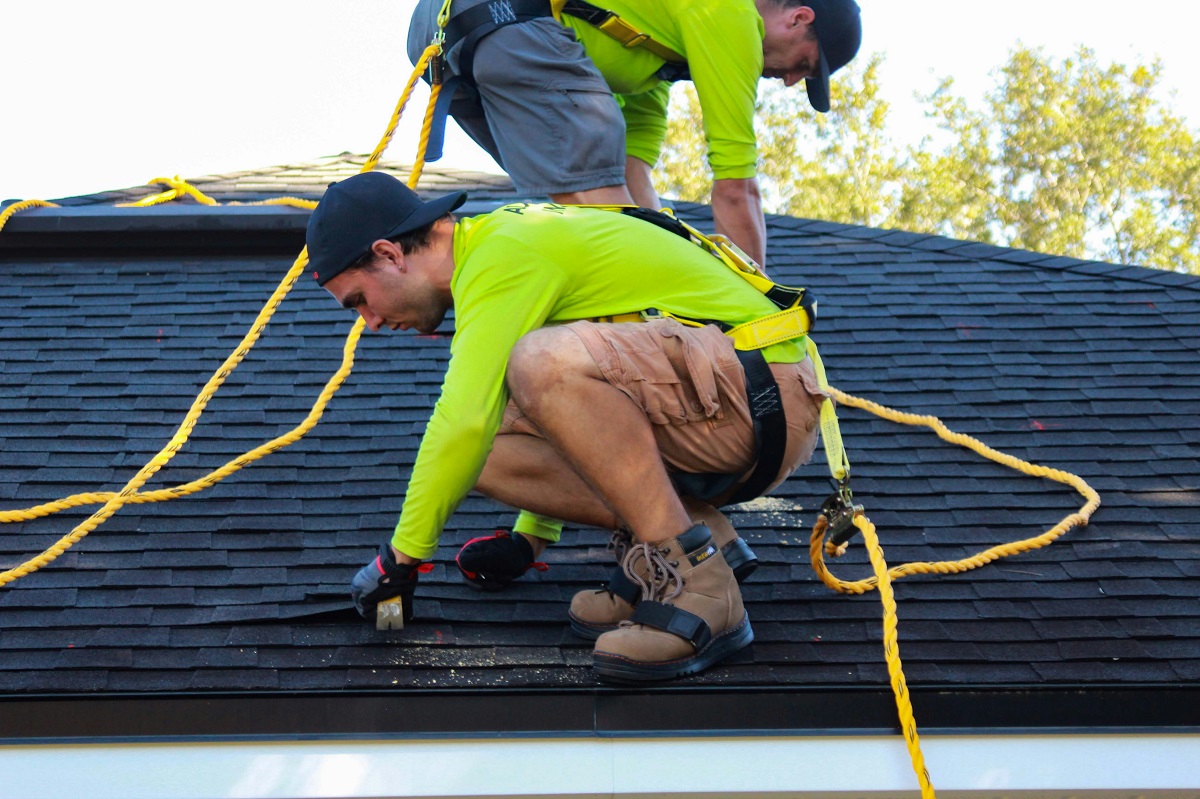
Where the property sits and what material you choose can shift your final cost more than almost any other variable.
Labor rates vary significantly by region, with coastal metros and areas with strict building codes tending to run higher than the national averages cited above. If you are flipping in a high-cost labor market, treat the upper end of the ranges from both data sources as your realistic starting point rather than the midpoint.
Material choice matters just as much:
- Asphalt shingles remain the cheapest and most common choice for flips, offering the best return relative to cost
- Metal roofing costs considerably more upfront but can be a selling point in markets where buyers value durability and energy efficiency
- Premium materials like tile, slate, or copper rarely make financial sense on a flip unless the neighborhood comps specifically demand it
Roof pitch and complexity also factor in. A steep or heavily cut-up roofline with multiple valleys, dormers, and angles requires more labor hours and safety equipment than a simple gable roof, which pushes the per-square labor cost toward the higher end of any published range.
Smart Budgeting Strategies for Flippers
Once you understand the baseline numbers, the goal shifts to protecting your margin. A few practical habits go a long way here.
- Get at least three roofing quotes before finalizing your rehab budget, since pricing can vary substantially between contractors even in the same market
- Ask every contractor to itemize their quote so you can compare apples to apples on tear-off, decking, materials, and labor separately
- Match your material choice to your exit strategy; a roof that outperforms the rest of the neighborhood rarely returns its full cost at resale
- Time your roofing work early in the rehab sequence so interior work is not exposed to weather delays or leaks
- Keep a dedicated contingency line for roofing specifically, separate from your general rehab contingency, given how often decking issues surface mid-project
Red Flags That Make Replacement Non-Negotiable
Some conditions remove the debate entirely and point straight to a full replacement, regardless of budget preferences.
- Visible sagging in the roofline, which usually signals structural decking failure
- Daylight visible through the attic decking
- Widespread moisture staining or mold across multiple rafters
- Shingles that are brittle, cracked, or missing across large sections rather than isolated spots
- A roof already carrying two or more layers of shingles, which most codes will not allow to be overlaid again
If you spot any of these during your initial walkthrough, factor a full replacement into your offer price from day one rather than hoping a contractor finds a cheaper fix once you are already under contract.
Bringing It All Together
Roofing will always be one of the more expensive and less flexible line items on a house flip, but it does not have to be an unpredictable one. Anchoring your budget to the 2026 data from Fixr and NerdWallet gives you a defensible starting range of roughly $9,500 to $10,000 for a typical replacement, with the understanding that size, material, region, and roof complexity can push that number considerably higher. Pair that baseline with a disciplined repair-versus-replace evaluation, itemized contractor quotes, and a dedicated contingency reserve, and the roof stops being a source of budget anxiety and becomes just another line item you have planned for correctly.